Your couch bears the brunt of everyday strain more than almost any other type of furniture in your household. From late-night meals to pets snuggling up on it or children using it as a trampoline, there’s plenty of dirt and oils accumulating over time in your couch’s fabric fibers. Nevertheless, upholstery cleaning receives far less attention than carpet or hardwood cleaning, mainly since many mistakenly assume couches either need to be thrown away or cleaned successfully. However, there are ways to prolong the life of your couch and knowing when to do this yourself and when you would need a professional’s assistance is what will help you save it.
In MGX Hardwood Care, we believe that upholstery cleaning is similar to carpet cleaning but adjusted according to the specifics of fabric furniture.
Why Upholstery Gets Dirty Faster Than It Looks
You may not realize it, but every time you use your upholstered couch, it is actually absorbing skin oils, flakes of skin, dust, and a variety of airborne matter often without showing stains. This type of general soiling does not create any visible stains, but it does build up gradually over time, which can make your couch seem perfectly clean while it contains large amounts of dirt and oil trapped within its fabric and stuffing.
This accumulation of dirt isn’t only a problem of cleanliness. It can also become a problem for the air quality.
Know Your Fabric Before You Clean
Before proceeding with any do-it-yourself cleaning, confirm the manufacturer’s cleaning code, which can typically be found on a label below the cushions, or around the frame:
- W – Cleaning with water is safe
- S – Cleaning with non-water solvent only; using water might lead to discoloration or shrinking
- WS – You can clean with either water or solvent
- X – Only vacuuming is allowed; do not use liquid cleaning solutions, whether professional or otherwise
One of the most common reasons for upholstery damage is using incorrect cleaning methods according to the fabric’s cleaning code. For example, “S” fabric cleaned with water could develop water stains, shrink or become discolored, thus becoming impossible to restore.
Let us move to the specific types of fabric – microfiber should be looked at particularly closely as it is one of the most frequently used upholstery materials, which is very easy to clean incorrectly.
Microfiber Couch Cleaning: What Makes It Different
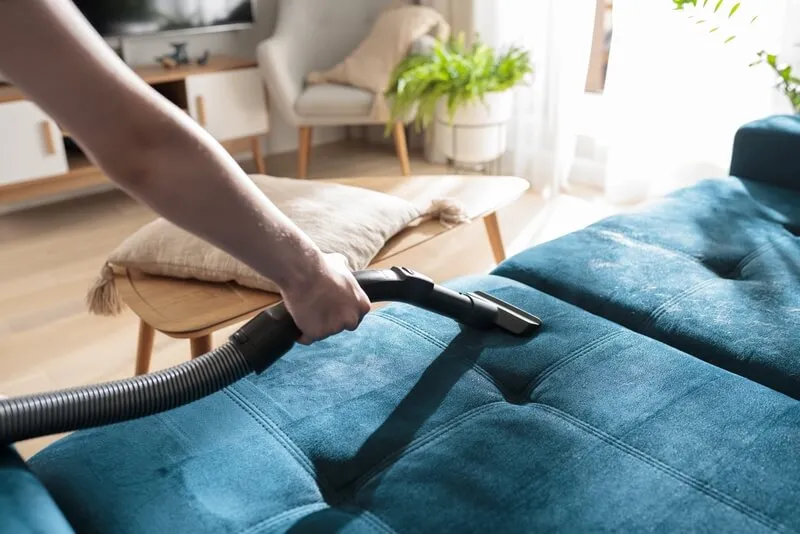
Cleaning a microfiber couch is a delicate matter because microfiber fabrics can suffer from water stains when cleaned improperly, even when they are safe to clean with water. One thing that people often mistakenly do is spot clean a microfiber couch with plain water, which can leave a stain or a ring in the fabric after the cleaning has been finished. In essence, spot cleaning the couch makes it dirtier than it was before.
For effective cleaning of most types of microfiber, using a rubbing alcohol solution is better because of its safety. Lightly spray the solution onto the microfiber couch and use a soft cloth or sponge to rub it into the fabric. After that, a brush with soft bristles can be used to brush the fabric when it dries. However, it is important to check the manufacturer’s cleaning code first since some of the microfiber sofa blends can be water-safe.
DIY Spot Cleaning vs. Professional Deep Cleaning
The ability of DIY spot cleaning to prevent preliminary spills from becoming permanent stains is impressive, but that doesn’t mean we should rely on those cleaning methods all the time. With respect to using DIY in cleaning, it must be kept in mind that:
- DIY cleaning often only works on the surface level, without dealing with dirt and oily substances that are deeper in upholstery foam
- DIY cleaning product and techniques can “set” stains; usually it is the case that trying to clean stains results in making them permanent instead of removing the
- DIY cleaning is not able to address odor and allergen accumulation.
- Old stains will require assistance of professional cleaning products rather than store bought cleaning agents due to their effectiveness.
Sofa Stain Removal Service: What to Expect
Reliable sofa stain removal services start with determining the fabric and checking its cleaning code. After that, visible stains are often first treated using the appropriate solutions based on the fabric type. Depending on the cleaning code, the specialists will most likely employ steam cleaning, low-moisture cleaning, or solvent cleaning followed by efficient drying of the sofa to avoid shrinkage and watermarking.
Additionally, some professionals offer enzyme-based treatments that target the cause of the odor rather than just masking it with fragrance when dealing with set-in stains or pet-related odors. This is crucial for cushions and padding that retain the odor source much longer than one might expect.
Understanding Couch Deep Cleaning Cost
The chair deep cleaning prices for a professional upholstery cleaning service vary according to a few factors. They include the size of the chair and type of upholstery, type of fabric and cleaning process, and whether you need any stain removal or odor treatment in addition to deep cleaning. Like with carpet cleaning, the low costs sometimes mean lesser cleaning. Make sure to confirm whether pre-treatment and full extraction are included before hiring the service.
Frequently Asked Questions
How often should upholstery be professionally cleaned?
Most households benefit from professional upholstery cleaning every 12 to 24 months, though homes with pets, kids, or heavy daily use may benefit from more frequent service.
Can water damage fabric couches?
Yes, particularly on “S” coded fabrics or microfiber cleaned incorrectly — water can cause staining, shrinkage, or watermarking if used on fabric not designed for water-based cleaning.
Is professional upholstery cleaning worth it compared to a DIY spray cleaner?
For general maintenance and fresh minor spills, DIY products can help. For embedded odor, older stains, or general buildup, professional cleaning reaches deeper than most store-bought options can.
Give Your Furniture the Same Care as Your Floors
Upholstery should be given the same attention as carpets or hardwood floors because it puts up with a lot of wear every day, although this wear and tear is not always visible. MGX Hardwood Care offers professional upholstery cleaning according to the type of fabric you have, so you can be assured that you get the right type of cleaning.